From Failing Heating to Low Cost Net Zero
The Requirement
A community organisation came to us looking to understand how to replace a 40-year old gas heating system with a new system that would be cost-effective, affordable and support their environmental objectives. Not an easy combination with low UK gas prices but conversely, a low-carbon electricity grid!
The Background
Bristol’s 58th Scouts provide a community building that hosts not only regular Scout meetings but an abundance of other community events. The building was constructed in the early 1980s with help from the community and is in good order today but still relied on the original gas-fired hot air system, blowing air through underfloor ducts into most spaces. This system had basic controls (a wall-based thermostat) that meant that it is occasionally left on by hall users. The system overall has no replacement parts easily available, and is critical to comfortable use, especially to generate leasing revenue for the space.
As a charity, the organisation had some funds to apply to improve the building that we took into account.
Our Approach
We conducted two energy surveys, one an empirical, unintrusive survey to BS EN 16247 standards to identify practical, actionable ways to save energy.
With the need to shift to fossil-free heating, and without an existing wet heating system (no pipes or radiators), there were fewer options to consider. The operational hours of the site meant that using infrared heating would result in a cost overrun on keeping warm. Air conditioning, however (an air to air heat pump) allowed for low-cost energy with the added benefit of offering cooling in the hotter months (more future proof, with a changing climate).
Where’s the Heat Lost?
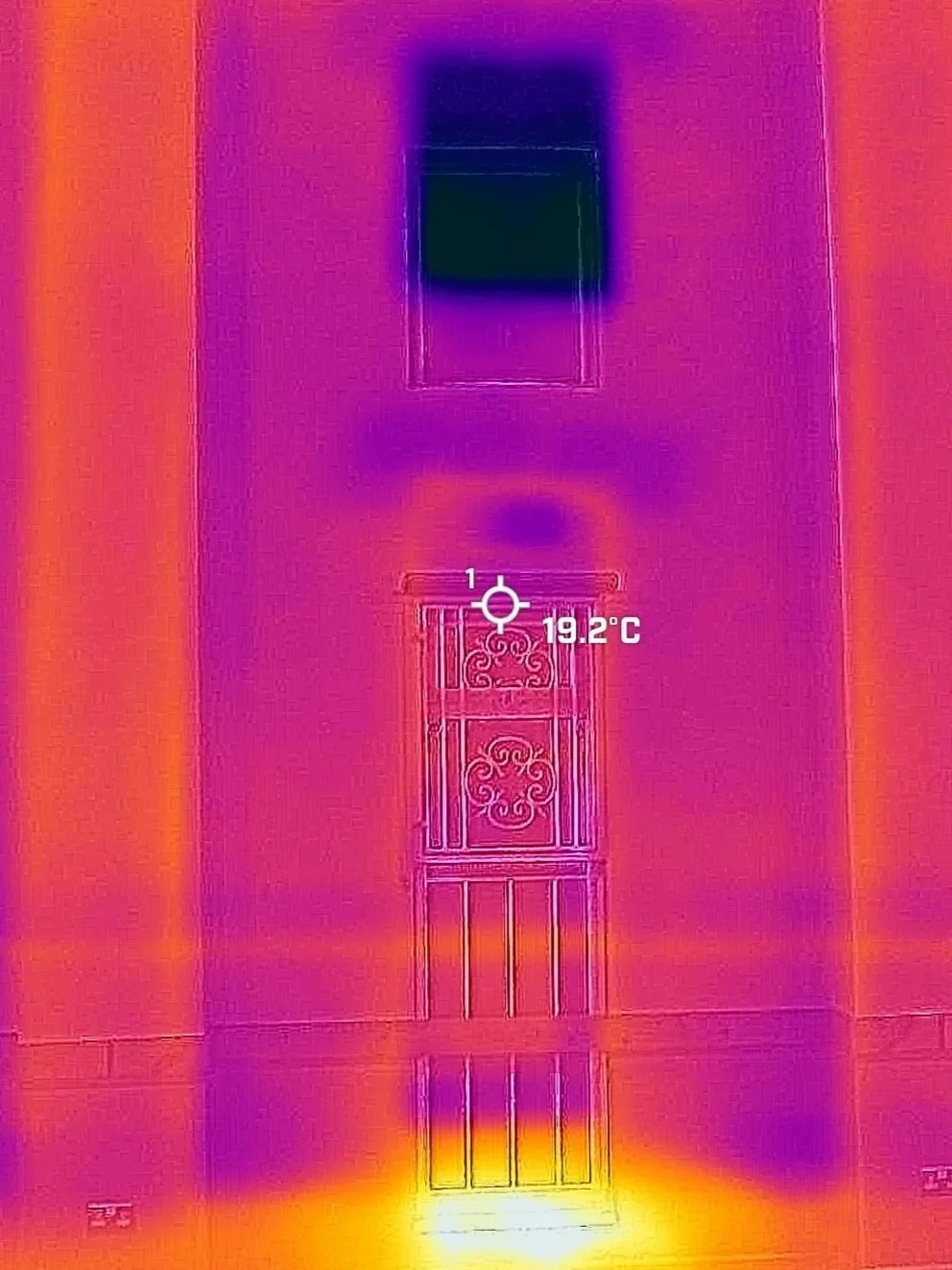
IR image showing heating vent below and heating loss through a window, above
We then looked at ways to reduce heating demand, so that any new system would run less to achieve similar comfort. This was supported by a thermographic survey that allowed us to identify where real heat losses were occurring. This showed that windows and loft hatches needed attention.
Further, with a large roof, a small solar PV system would help to reduce energy demand further.
Halving Energy & Carbon
In total, our audit identified the potential to halve bills and carbon emissions through the introduction of air-conditioning, supported by some fabric improvements and solar PV.
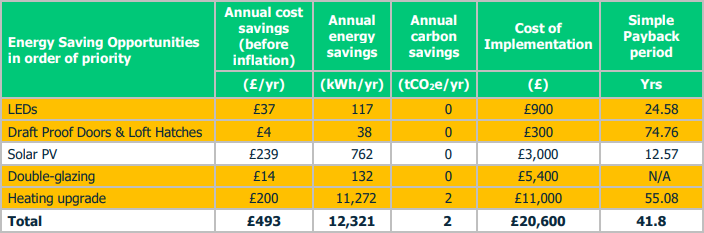
A summary of energy-savings from an audit on a community building
Turning Ideas into Action
An energy audit is only as useful as what you can do with it, and without energy or building experts on-hand, the Scouts appreciated our offer to recommend installers to support the delivery. We brough in local expert Source Electrical, who we’ve worked with at several clients. They were able to specify a heating system that was practical to use, delivered better comfort more quickly and was discreet and affordable. We then brought in Q Works to ensure that the new system wouldn’t affect the health of the building, with the transition from underfloor hot air to overhead heating. Source were able to support on complete gas removal for the site, by capping off the supply and vents and providing an electrical water boiler, too.
As of the end of April 2026, the site will be able to achieve Net Zero by only using grid electricity for its needs, will be more comfortable and will meet Bristol City Council’s lease requirements
Hear from our happy client here